Practical guidance on whether a heat pump is right for your home, how it works with underfloor heating, and what to realistically expect.
Heat pumps produce far less carbon than gas or oil boilers, especially when using renewable electricity.
In well-insulated homes with underfloor heating, many households achieve similar or lower running costs than gas boilers.
You can currently get up to £7,500 through the Boiler Upgrade Scheme to help with installation costs.
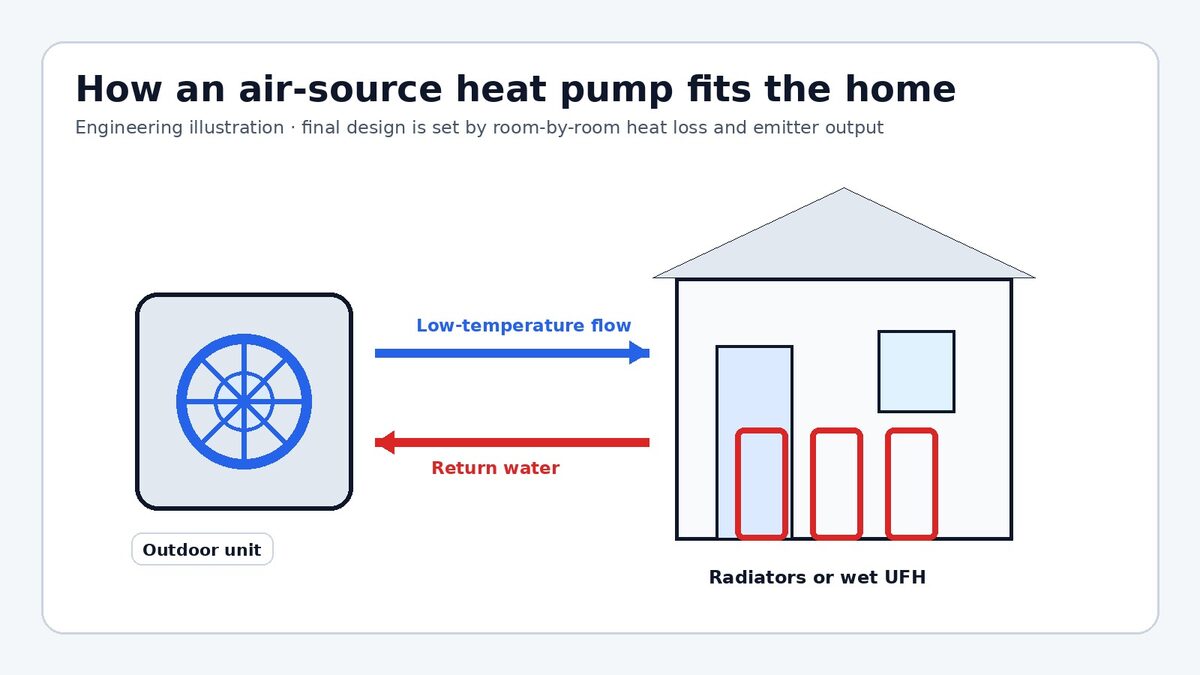
An air source heat pump takes heat from the outside air (even when it’s cold) and transfers it into your home to provide heating and hot water.
It works similarly to a fridge but in reverse. Because it moves heat rather than generating it through combustion, it can be significantly more efficient than traditional boilers.
[ Image: How an Air Source Heat Pump Works ]
Air source heat pumps work most efficiently at lower water temperatures (typically 35–45°C). This is why they pair especially well with underfloor heating, which is designed to operate at these lower temperatures.
Correct sizing is critical. An undersized system won’t keep your home warm, while an oversized one can be inefficient and more expensive.
Explore Heat Pump Sizing Factors →Heat pumps perform best in well-insulated homes. Before installing one, it’s worth improving loft insulation, wall insulation, and reducing draughts.
You’ll need suitable outdoor space for the unit. Modern heat pumps are much quieter than older models, but location still matters.
Heat pumps can provide domestic hot water, but you may need a larger hot water cylinder than you’re used to with a gas boiler.
Even with the £7,500 grant, heat pumps have a higher upfront cost. Long-term savings depend heavily on insulation and system design.
Use our Heat Pump Estimator for sizing and costs, or try the Combined Estimator if you're also considering underfloor heating and solar.